Frequently Asked Questions
What is ear wax (cerumen)?
Earwax, or cerumen, is a natural substance made of dead skin cells, hair, and dust that protects the ear canal. It doesn't usually cause problems, but a build-up can sometimes lead to reduced hearing, earache, or dizziness.
Can I remove ear wax at home?
Softening drops such as olive or almond oil can help, using 2-3 drops twice daily for one to two weeks. If wax remains after this, book an assessment so our trained staff can check whether microsuction is needed.
How much does an ear wax assessment cost?
An assessment costs £20 and takes around 30 minutes, checking both ears and advising whether microsuction is required. This fee is fully deducted from your treatment cost if microsuction is carried out during the same visit.
Why is microsuction safer than ear syringing or irrigation?
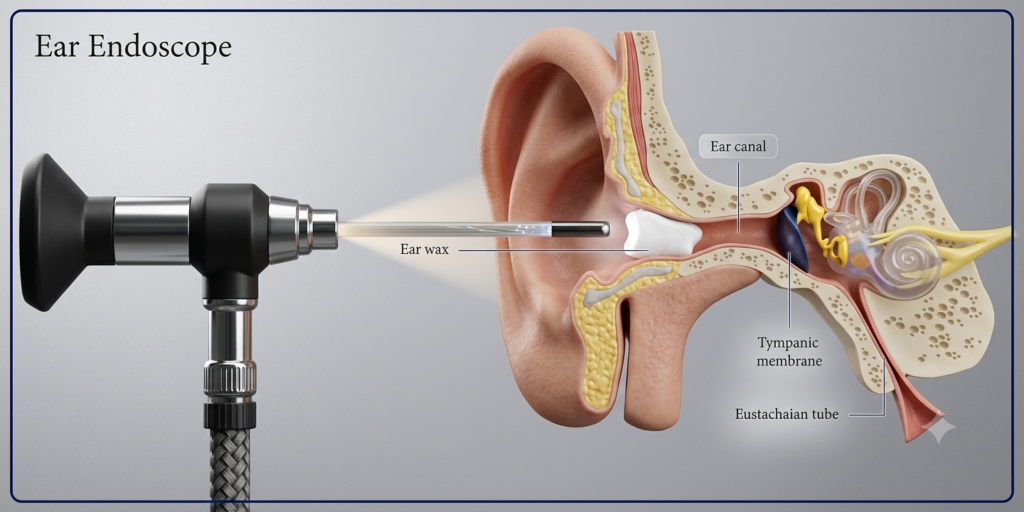
Syringing uses water pressure that can push wax deeper or worsen an existing perforation or infection. Microsuction instead uses gentle suction under direct endoscopic view, so our trained staff can see the ear canal clearly throughout the procedure.
What if my earwax is particularly hard or stubborn?
For stubborn wax, we may recommend sodium bicarbonate drops for three to five days beforehand to help soften it. Warm the drops to room temperature first, then apply while lying with the affected ear facing upwards.
When should I see a GP instead of booking ear wax removal?
If you have sudden hearing loss, severe ear pain, discharge, bleeding, or dizziness, contact your GP or NHS 111 promptly, as these symptoms may need urgent medical assessment beyond routine ear wax removal.
This information is provided for general guidance only and does not replace personalised medical advice. If you experience severe pain, sudden hearing loss, discharge or bleeding, please contact your GP or NHS 111 promptly.
Content reviewed: 3 August 2026